


The pansexual flag — with its bold pink, sunny yellow, and sky blue stripes — is a celebrated symbol of attraction that transcends gender. Designed in 2010 to give the pansexual community its own visual identity, the flag has grown into a recognizable emblem flown during Pride Month and beyond. In this post, we'll break down the meaning of each color, the flag's origins, and how it differs from similar pride flags like the bisexual flag.
This guide explores the pansexual flag’s colors, meaning, history, symbolism, and even the discussion around new pan flags. If you’re curious about pansexuality or want to understand the pan pride flag better, you’re in the right place.
Over the past decades, the LGBTQ+ community has come with so many gender identities and sexual orientations to help identify each individual.
Pansexuality is one of them, with its own beautiful flag representing those within the community.
Although standing independently among other LGBT pride flags, the pan flag has still been unknown or confusing to some people. If you are one of them, read this post.
The pansexual flag is a vibrant and meaningful symbol for those whose attractions transcend gender boundaries. Alongside other LGBTQ+ flags, it celebrates diversity, identity, and love in all its forms. But what is the pansexual flag, and how does it represent the pan community?
Looking to fly your pansexual pride at home? Explore our LGBTQ+ Pride flag collection — including the inclusive Progress Pride design that honors all identities, all genders, and the full spectrum of love:
Show Your Pride at Home
Whether you celebrate Pride Month or fly your colors year-round, these handcrafted LGBTQ+ pride flags from Flagwix bring vibrant, lasting beauty to your front porch, garden, or living space. Each design is double-sided printed on durable canvas — built to wave proudly through every season.
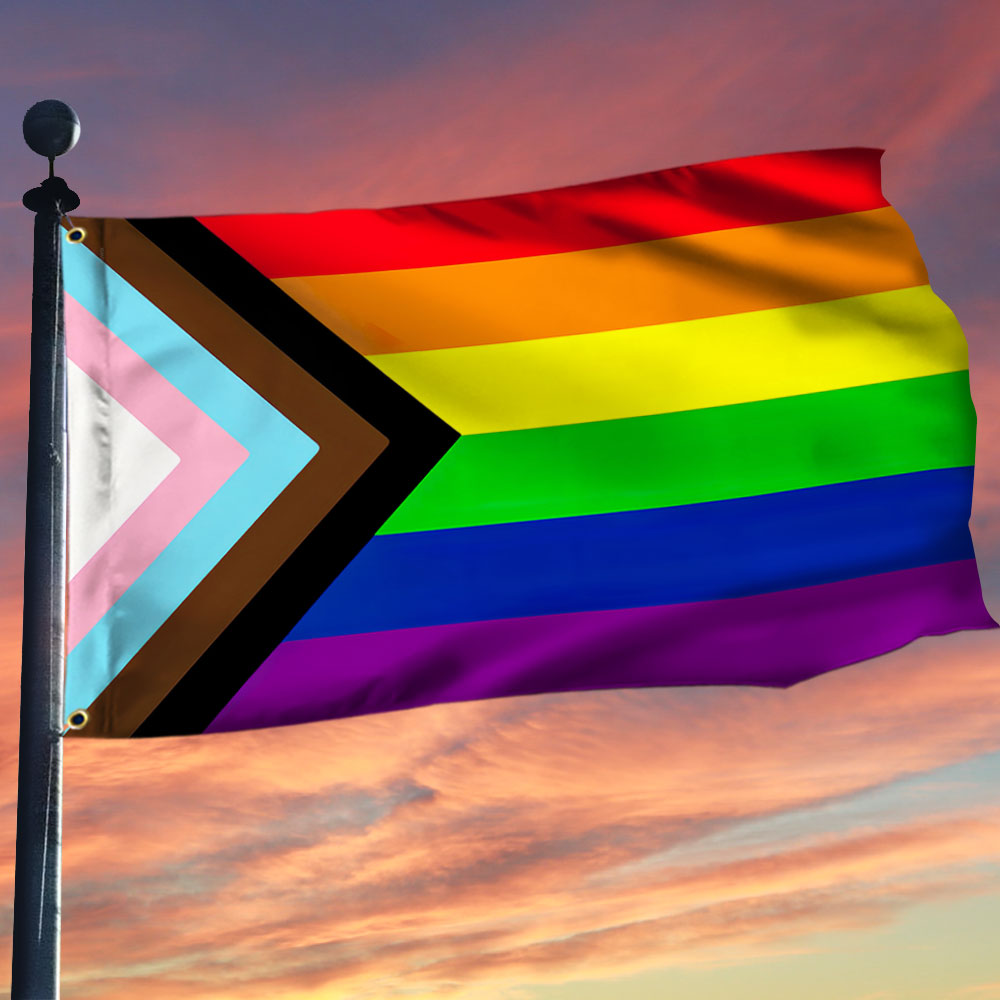
Pride Progress Grommet Flag
The classic rainbow paired with a chevron honoring trans, BIPOC, and HIV/AIDS communities. Heavy-duty grommets, made for outdoor flagpole display.
SHOP NOW →
Pride Progress House & Garden Flag
Same inclusive Progress Pride design in a versatile garden & house flag format. Three sizes for porches, gardens, and front-yard display.
SHOP NOW →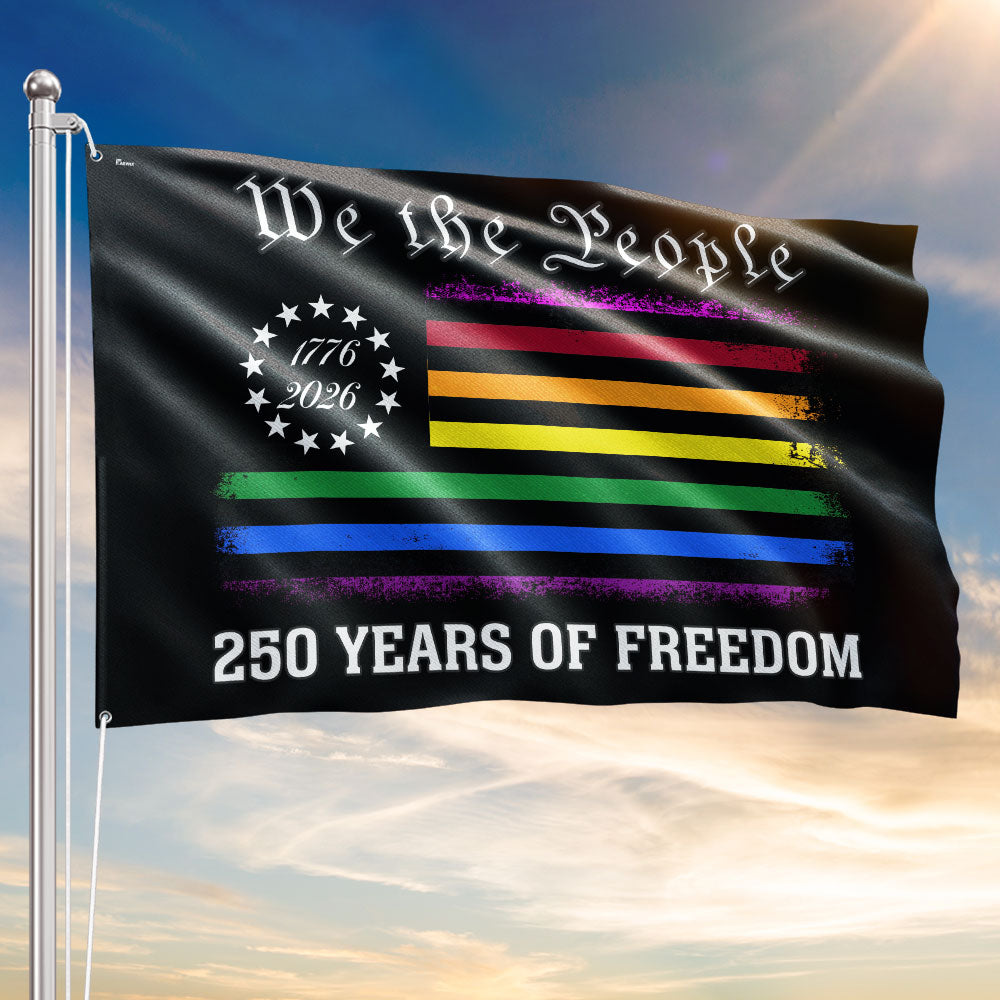
250 Years — We The People Means Everyone
A meaningful crossover honoring both America's 250th anniversary (1776–2026) and LGBTQ+ pride — rainbow colors meet the Constitution's founding promise. Heavy-duty grommet flag for outdoor display.
SHOP NOW →
We The People Means Everyone
A bold fusion of Pride and Constitution — rainbow stripes meet “We The People Means Everyone,” a patriotic reminder that founding ideals embrace all Americans.
SHOP NOW →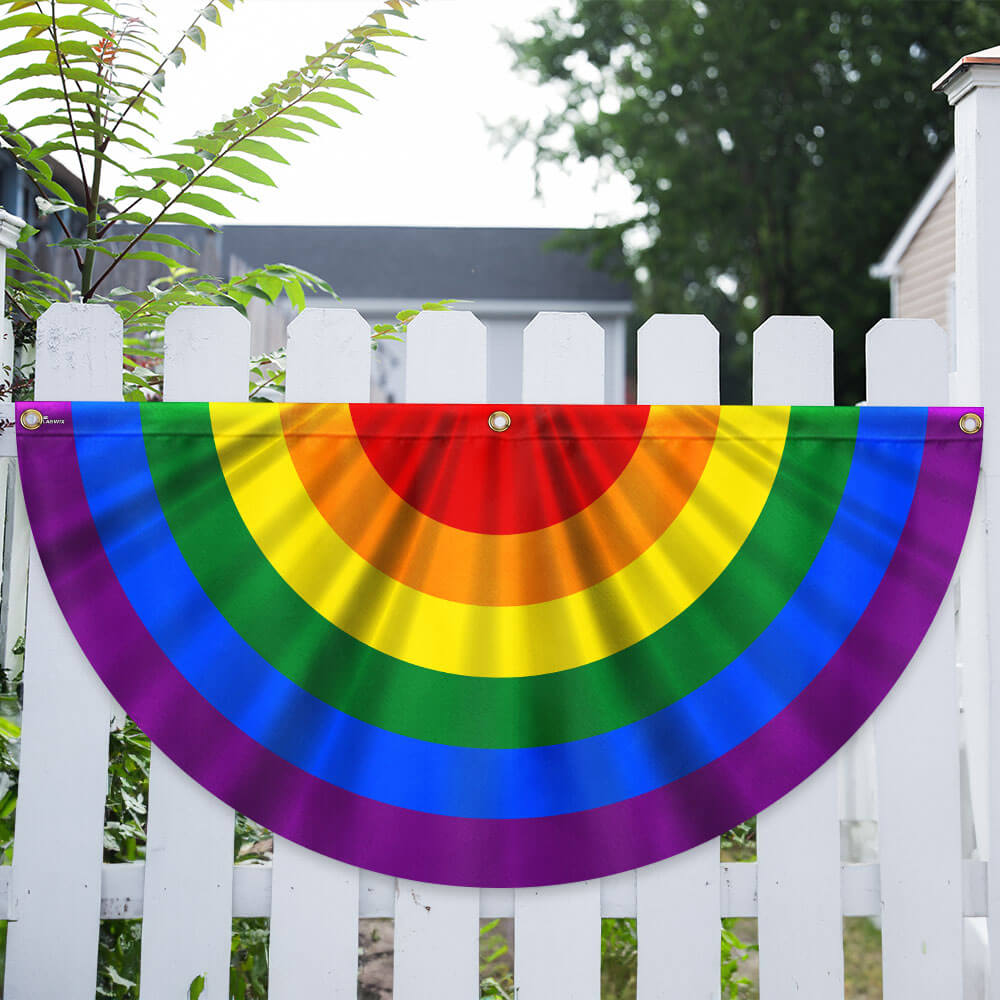
Rainbow Pride Fan Flag
A striking half-circle fan flag in classic rainbow Pride colors. Heat-transfer printing on durable canvas. Available in 1.5×3 ft and 3×6 ft — perfect for porches and parades.
SHOP NOW →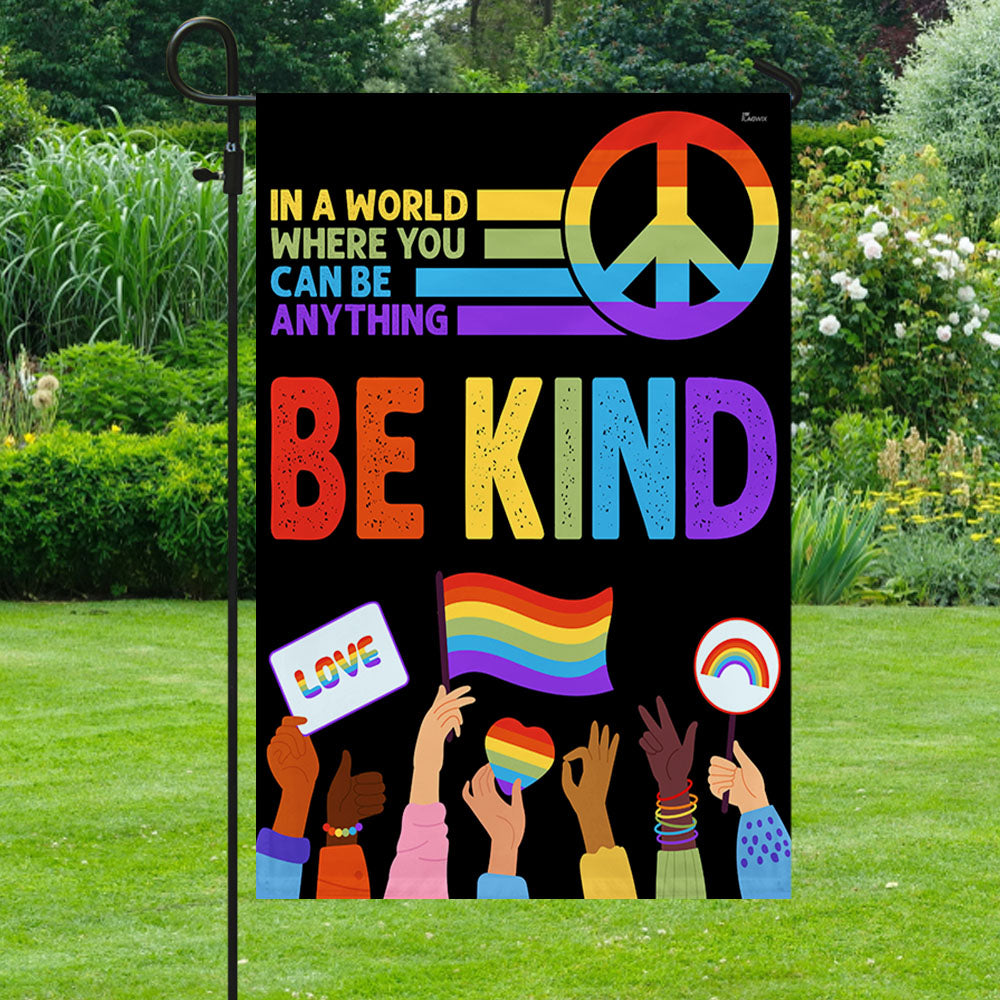
Be Kind Peace Sign Flag
A vibrant peace sign at center, framed by the timeless message “In A World Where You Can Be Anything, Be Kind.” Set against rainbow Pride colors — a gentle but powerful reminder.
SHOP NOW →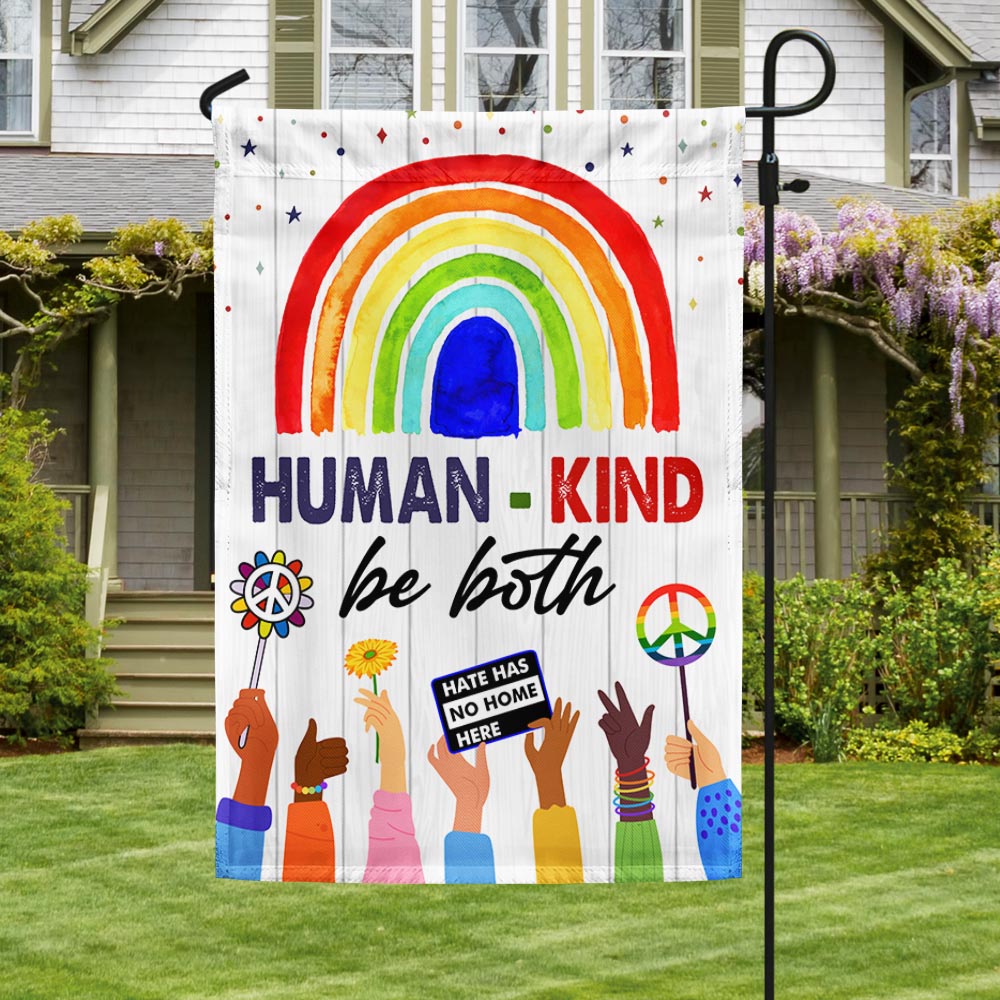
Human Kind, Be Both
A clever wordplay design — “Human Kind, Be Both” — on a vibrant rainbow backdrop symbolizing LGBT diversity. Two ideas in one inspiring message: humanity and kindness.
SHOP NOW →
Equality Sunflower Flag
A radiant sunflower at center, surrounded by 7 core values — Kindness, Peace, Equality, Love, Inclusion, Hope, and Diversity. Available in 3 sizes for indoor and outdoor display.
SHOP NOW →
Contents
- 1 What is Pansexuality?
- 2 Pansexual Flag History
- 3 Pansexual Flag Colors and Their Meaning
- 4 Pansexual Pride
- 5 What is The New Pansexual Flag?
- 6 Differences between Pansexual vs. Bisexual, Omnisexual, and Non-Binary
- 7 Symbolism Beyond the Flag: The Pansexual Symbol
- 8 Pansexual Celebrities
- 9 Pansexual Relationships
- 10 The Role of Flags in LGBTQ+ History
- 11 Other LGBTQ+ Flags and Their Meanings
- 12 FAQs About LGBTQ+ Flags
- 13 Final Thoughts
What is Pansexuality?

People also search


Pansexuality, often referred to as “pan,” describes attraction to people regardless of gender identity, biological sex, or sexual orientation. In other words, pansexual individuals see beyond the traditional gender binary and embrace love for everyone.
Unlike bisexuality, which often focuses on attraction to two or more genders, pansexuality is about being gender-blind in attraction. This distinction is what makes the pansexual flag a unique and powerful emblem for the community.
Pansexuality is a type of human sexuality that forms attraction toward people regardless of their gender identities, sexualities, or biological genders.
In other words, pansexual people can have a romantic or (and) sexual relationship with anyone no matter what that person identifies as.
Those things just aren’t the factors for them to determine what their partners must become.
Try to find more? Here are our suggestions
Pansexual Flag History

The pansexual flag was designed by Tumblr user Jasper V. in 2010. It quickly gained popularity as a way to represent pansexual people within the LGBTQ+ community. The flag’s design was meant to distinguish pansexuality from other orientations, such as bisexuality, and to promote inclusivity and respect.
Despite its simplicity, the flag conveys an important message: pansexuality is valid, diverse, and deserving of recognition.
Over the years, the pan pride flag has become a staple of LGBTQ+ representation, empowering pansexual individuals to celebrate their identity.
Pansexual Flag Colors and Their Meaning

How the Pansexual Flags Coloring the World?
Over the past decades, the LGBTQ+ community has introduced many gender identities and sexual orientations to help individuals define themselves. Pansexuality is one such orientation, and it comes with its own beautiful flag that represents those within the pan community.
The pansexual flag is a tri-colored banner that reflects inclusivity and attraction beyond gender norms. Here’s what the colors represent:
- Pink (Top Stripe): Attraction to women.
- Yellow (Middle Stripe): Attraction to nonbinary individuals, such as agender, bigender, or genderfluid people.
- Blue (Bottom Stripe): Attraction to men.
These pansexual colors highlight the openness and universality of pansexuality. This pink-yellow-blue flag describes how pansexuality works by representing inclusivity across all gender identities.
It refers to those attracted to a man or a woman, or an intersex person. Additionally, that person can belong to any gender identity along the spectrum with any sexuality.
Pansexual Pride
The pan pride flag plays a central role in representing pansexual individuals within the LGBTQ+ community. Whether flown at pride parades or shared on social media, it celebrates the acceptance and inclusivity that defines pansexuality. The flag fosters a sense of belonging and pride, helping individuals embrace their identity.
What is The New Pansexual Flag?
In 2020, a new design of the pansexual flag appeared online with the initial aim to replace the original one.
This new pan flag design was not from Jasper, the creator of the original pan flag. It was made by a group of people who assumed Jasper supported negative things.
But we are not going to discuss anyone’s stances here!

The new pansexual flag has six horizontal stripes with three different hues: red, yellow, and blue. Each hue is separated into two versions of color.
Each hue represents the same thing as what the old version does. However, the shades are not as bright as those depicted on the original flag.
Some individuals think the new design is beautiful, while others are not really into it.
Those who do not enjoy it said they were bored by the colors as it did not give them a sense of “Pride”. Others also believed that the its origin came from someone who was transphobic.
In fact, there were fourth new pan flags that have been circulating around online, but above is the most common design to talk about.
Despite these new designs, the original pansexual pride flag remains widely recognized and used.
Differences between Pansexual vs. Bisexual, Omnisexual, and Non-Binary
Pride Month 2026
June 2026 brings another Pride Month — a chance for the pansexual community to celebrate love that transcends gender. The pink-yellow-blue tricolor stands out beautifully alongside the rainbow at parades, on porches, and in personal spaces. Whether you're proudly pan or supporting someone who is, this is the perfect time to fly the flag with intention.
When it comes to choosing a flag that accurately represents you, you must first determine your gender identity and sexual orientation on the spectrum.
While many people are unsure whether they are pansexual or not, they frequently mix up the two concepts.
Pansexual vs. Bisexual, Demisexual, and Non-binary are some of the concepts that people frequently conflate.
To solve this problem, we’ll make some comparisons now.
Pansexual vs. Bisexual

Pansexual Flag vs. Bisexual Flag: What’s the Difference?
A common point of confusion is the distinction between the pansexual flag and the bisexual flag. Here’s a breakdown:
- The bisexual flag features pink, blue, and purple stripes, symbolizing attraction to two or more genders. Bisexual people feel attracted to those with either one of the two biological genders: male and female. There could be certain sexualities or gender identities they do not like.
- The pansexual flag, on the other hand, emphasizes inclusivity and attraction regardless of gender identity. Pansexuality refers to attraction toward people regardless of their biological sex, gender identities, and sexualities.
This distinction lies at the heart of the pan vs. bi debate, as pansexuality focuses on transcending gender entirely.
The pan vs. bi debate often highlights the fluidity of sexual orientation and how individuals choose to define themselves.
Pansexual vs. Omnisexual
Omnisexual people feel attracted to those of any gender but not gender-blind.
Omnisexual Flag Meaning: Similar to the pansexual flag, it represents attraction to all genders but acknowledges gender distinctions. Its colors often overlap with the rainbow and pan flags, creating a harmonious design.
Pansexual people feel attracted to those of any gender, even if they are gender-blind.

Pansexual vs. Non-binary
Each of the two terms falls to a completely different category. So if someone confuses these two concepts, they are also confusing gender identity and sexuality.

According to Wikipedia,
“Gender identity is the personal sense of one’s own gender. Gender identity can correlate with a person’s assigned sex or can differ from it. In most individuals, the various biological determinants of sex are congruent and consistent with the individual’s gender identity.“
The term Non-binary belongs to this case. It refers to those identifying themselves as no gender.
Nonbinary flag is created in 2014 by Kye Rowan.
Meaning: Yellow signifies individuals outside the gender binary, white stands for those embracing multiple genders, purple reflects the blending of masculine and feminine identities, and black symbolizes a lack of gender identity.
Unlike gender identity, sexuality (sexual orientation) is defined by the way in which a person is sexually or emotionally attracted to another person. Pansexuality is what belongs to this case.
Symbolism Beyond the Flag: The Pansexual Symbol
This symbol may get you confused at first glance, but it is not that complex.
It is exactly the combination of the male and female symbols with a half-circle on top to form a “P” — the first letter in “Pansexual.”
No source points out when this symbol was created and who made it. People have just used it for a long time to represent pansexuality.
But who cares? — it is artistically stunning!

If you are a pansexual American who would love to spread some messages during the upcoming Pride Month, this flag may interest you:
Pansexual Celebrities
Several well-known figures openly identify as pansexual, helping to bring visibility to the orientation:
- Janelle Monáe: Grammy-nominated musician and actress.
- Miley Cyrus: Pop star and advocate for LGBTQ+ rights.
- Brendon Urie: Lead vocalist of Panic! at the Disco.
These celebrities use their platforms to celebrate pansexuality and advocate for inclusivity.
Pansexual Relationships
Pansexual relationships are built on connection, love, and mutual respect, regardless of gender identity. For pansexual individuals, attraction often transcends traditional notions of gender, focusing instead on qualities like personality, intellect, or shared values.
The Role of Flags in LGBTQ+ History
Flags are a cornerstone of LGBTQ+ representation, fostering visibility and solidarity. The pansexual flag joins a rich tradition of pride flags, each symbolizing a unique identity:
- Rainbow Flag: Represents the LGBTQ+ community as a whole.
- Bisexual Flag: Highlights attraction to two or more genders.
- Trans Flag: Emphasizes inclusivity for transgender individuals.
- Nonbinary Flag: Celebrates those who exist outside the gender binary.
- Intersex Flag: Focuses on individuals born with intersex traits.
Each flag, including the pansexual flag, plays a vital role in uniting and empowering LGBTQ+ communities worldwide.
Other LGBTQ+ Flags and Their Meanings
Rainbow Flag
Creator: Gilbert Baker, 1978.
Meaning: Represents the LGBTQ+ community as a whole. Each stripe signifies a value: red for life, orange for healing, yellow for sunlight, green for nature, blue for harmony, and violet for spirit.
Asexual Flag
Created in: 2010.
Design: Four horizontal stripes: black for asexuality, gray for the gray area between sexuality and asexuality, white for allies, and purple for community.
Frequently Asked Questions
What do the pink, yellow, and blue stripes of the pansexual flag mean?
The pansexual flag has three horizontal stripes: pink represents attraction to women, yellow represents attraction to non-binary and genderqueer people (anyone who doesn't identify strictly as male or female), and blue represents attraction to men. Together, the three colors symbolize attraction to people of all genders.
When was the pansexual flag created?
The pansexual pride flag was designed in 2010, anonymously credited to an online creator on Tumblr known as "Jasper V." It quickly gained traction as a clear, distinct symbol for pansexual people who felt the bisexual flag didn't fully represent their identity.
What is the difference between pansexual and bisexual flags?
The bisexual flag features pink, purple, and blue stripes — representing attraction to two or more genders. The pansexual flag uses pink, yellow, and blue — emphasizing attraction to all genders, including non-binary identities (represented by yellow). The key distinction: pansexuality explicitly includes gender identity beyond the binary, while bisexuality is often defined as attraction to "two or more" genders.
When is Pansexual Visibility Day celebrated?
Pansexual and Panromantic Awareness Day is celebrated annually on May 24, with Pansexual Pride Day observed on December 8. June is also widely embraced as Pride Month, when the pansexual flag is flown alongside other LGBTQ+ pride symbols.
How do you display a pansexual pride flag?
You can fly a pansexual flag on a standard flagpole, hang it as a house or garden flag, or display it indoors as wall decor. Pansexual flags are most commonly displayed during Pride Month (June) and on Pansexual Visibility Day (May 24), but they're a welcome statement of identity year-round.
FAQs About LGBTQ+ Flags
-
Are there pride flags for allies of the LGBTQ+ community?
Allies of the LGBTQ+ community have their own pride flag, featuring black and white stripes with a rainbow-colored 'A.' This flag symbolizes support and solidarity with LGBTQ+ individuals, making it an emblem of allyship and adYes, the ally pride flag features black and white stripes with a rainbow-colored “A” to symbolize support for the LGBTQ+ community advocacy.
-
What do the LGBTQ flag colors mean?
The colors of the rainbow flag each represent a value: red for life, orange for healing, yellow for sunlight, green for nature, blue for harmony, and violet for spirit.
-
What does the pink triangle mean on a pride flag?
The pink triangle was originally used as a symbol of persecution during World War II but has since been reclaimed as a symbol of LGBTQ+ pride and resilience.
-
What does the pansexual flag represent?
The flag represents attraction to individuals regardless of gender identity, celebrating inclusivity and diversity.
Final Thoughts
The pansexual flag is more than just a design; it’s a powerful symbol of love, inclusivity, and identity. Whether you’re exploring your own orientation or supporting the pan community, the flag stands as a reminder that love knows no boundaries.
Celebrate the beauty and meaning of the pansexual flag colors and let’s continue to uplift every voice in the LGBTQ+ spectrum. Thank you for reading
If you have any inquiries about our products and services, please email us via [email protected] or leave us a reply below.
Wish you a good day!
Discover a stunning collection of LGBTQ+ flags at Flagwix, including popular designs like the LGBT Rainbow Flag, Progress Pride LGBTQ Flag, LGBT Pride American Grommet Flag, and the LGBT Kindness Peace Diversity Flag. Perfect for Pride Month or year-round celebration, these high-quality, customizable flags allow you to showcase your pride and individuality in style. Celebrate love and inclusivity with Flagwix!


